

🕹️ June 27, 1972 — Atari Is Founded
Nolan Bushnell named the company after a move in the board game Go — a polite warning that you’re about to be surrounded. He wasn’t wrong about what was coming.

On June 27, 1972, Nolan Bushnell and Ted Dabney incorporated Atari in Sunnyvale, California, having discovered that their first choice of company name — Syzygy — was already taken by a roofing contractor. The name Atari came from Bushnell’s favorite board game: in Go, it describes a position of impending capture. Within five months, Atari’s first engineer, Al Alcorn, had built a video game simulating table tennis as what Bushnell described as a training exercise. It was never intended to ship. It was so addictive that the first prototype — installed in a Sunnyvale tavern called Andy Capp’s as a test — broke down within weeks because the coin box was too full. They named it Pong.
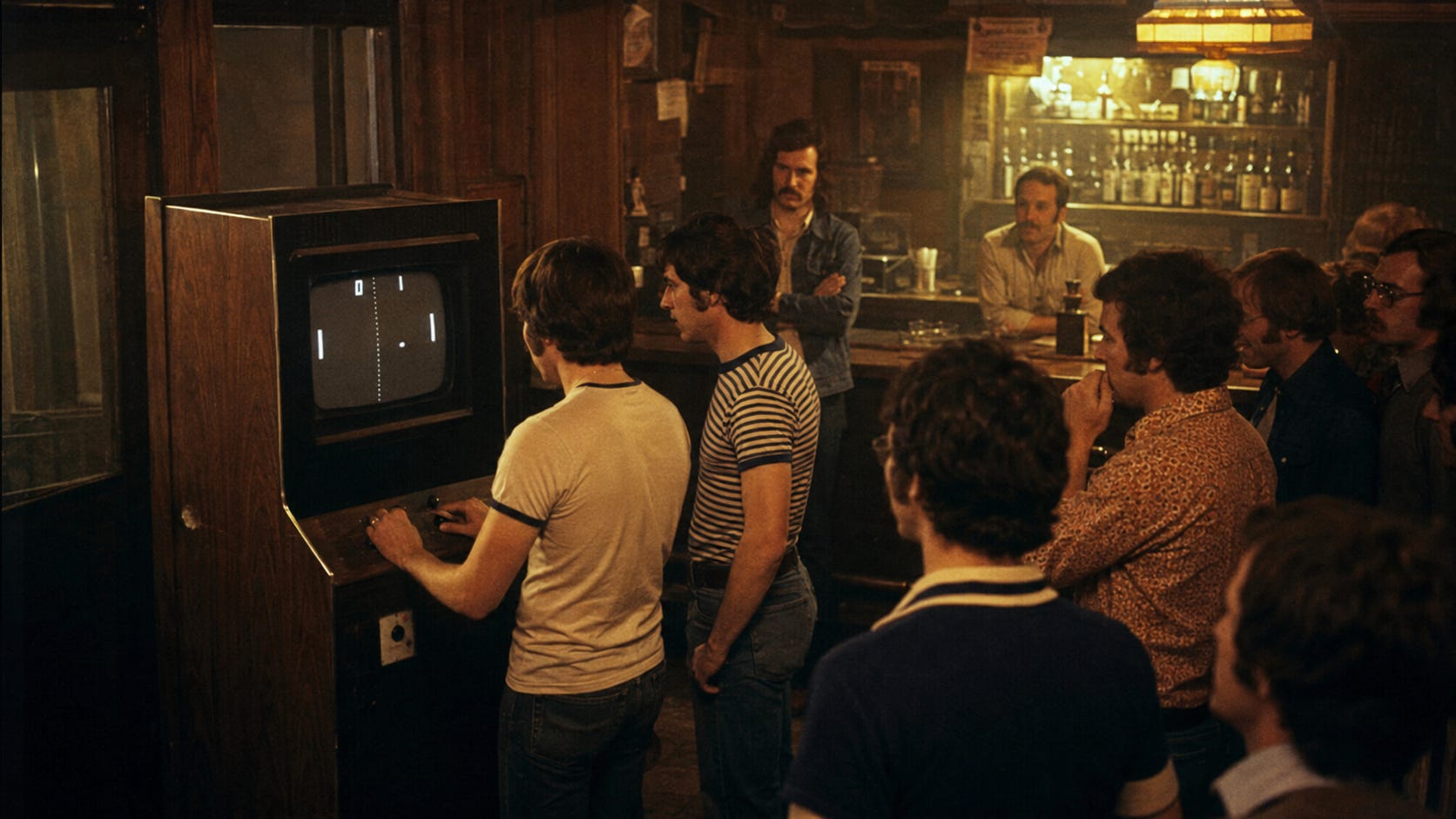
The Accident That Became an Industry. Bushnell and Dabney had not set out to invent the home video game industry. They had set out to build a commercially viable arcade game. Pong’s success in 1972 and 1973 created demand they couldn’t supply — a problem that produced both rapid growth and fierce competition from imitators who copied the concept within months. Atari’s subsequent years were defined by a series of escalating bets: the Atari 2600 home console in 1977, which brought the arcade home; the licensing of Space Invaders in 1980, which drove 2600 hardware sales faster than any game before it; and the acquisition by Warner Communications in 1976 for $28 million, which provided the capital to scale but introduced the corporate friction that would eventually contribute to Atari’s undoing.
What It Changed. The 1983 North American video game crash — caused in significant part by a flood of low-quality Atari 2600 titles that eroded consumer trust in the format — destroyed an industry that Atari had built and came close to ending home video gaming entirely. What it actually ended was Atari’s dominance. Nintendo’s 1985 recovery of the U.S. market, built on a quality-control licensing system that prevented the title flood from recurring, is the direct commercial response to the problems Atari’s growth-at-any-cost approach created. The lesson Atari taught — that a platform lives or dies by the quality of its content ecosystem — has governed every console generation since, from PlayStation to Xbox to the App Store.
Where It Stands Now. The Atari brand has passed through multiple corporate owners since Bushnell sold it and eventually exists today as Atari SA, a French company that licenses the name and a library of classic titles for retro gaming products, mobile games, and branded merchandise. The original Atari Inc. was officially dissolved in 1992, exactly 20 years after Bushnell and Dabney incorporated it. Ted Dabney died in 2018. Nolan Bushnell continues to work as an entrepreneur and speaker. The industry Atari created generates over $180 billion in annual global revenue — larger, by an order of magnitude, than the film industry it once seemed to threaten.
Did You Know? Before Pong was Pong, it was assigned to a 22-year-old engineer named Al Alcorn as what Bushnell told him was a training exercise — a simple warm-up project to get him oriented before working on something real. Alcorn was not told it was a test. He was told it was a client contract. He built the game properly, added ball acceleration and angle variation that Bushnell hadn’t asked for, and delivered something significantly better than what the “assignment” required. Bushnell later acknowledged the deception and credited Alcorn’s improvements with making Pong worth shipping. The most consequential video game in history was built by an engineer who thought he was doing a homework assignment.