


There is a moment in shopping when intention softens.
You are not searching for a specific item. You are not comparing prices. You are not solving a defined problem. You are simply moving — through aisles, through corridors, through screens.
Commerce learned early that this in-between state could be shaped.
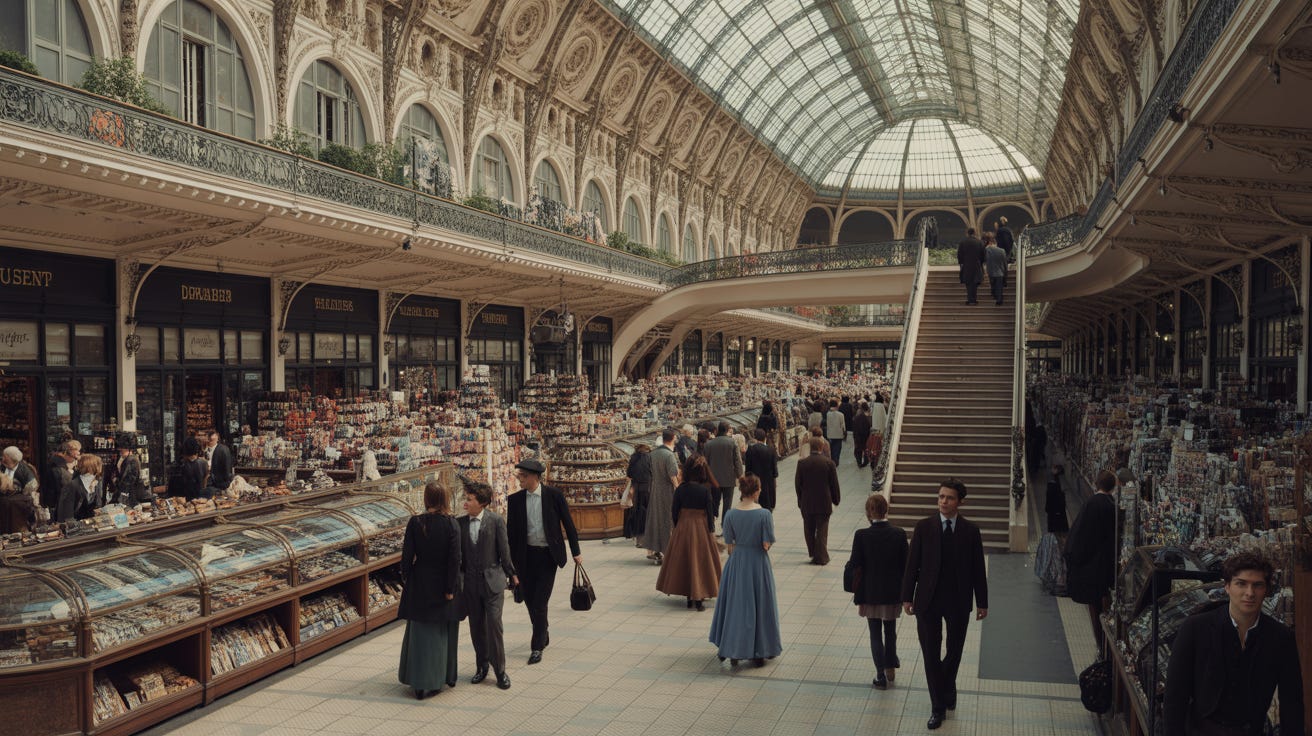
In the late 19th century, Paris’s grand magasins — Le Bon Marché, Printemps, Galeries Lafayette — reimagined the store not as a counter-based transaction point, but as an interior landscape. Wide promenades curved around central atriums. Balconies layered departments vertically. Sightlines extended just far enough to intrigue, but rarely in straight lines to an exit.
This was not confusion. It was choreography.
The store invited wandering — and in wandering, discovery.
The materials have changed. The logic has not.
🧵 Where It Took Shape
The department store emerged during a period of urban redesign. Baron Haussmann’s Paris had introduced long boulevards built for spectacle and flow. Inside the grand magasins, that logic turned inward.
Merchants such as Aristide Boucicaut at Le Bon Marché understood that fixed prices and abundant displays reduced friction. Architecture did the rest. Instead of a clerk fetching goods from behind a counter, customers moved freely through rooms staged with textiles, glassware, toys, and ready-made garments.
The promenade was deliberate. Circulation paths discouraged straight-line efficiency. Staircases deposited shoppers into adjacent departments. Light filtered through glass domes to create a sense of openness while subtly anchoring movement toward central points of interest.
The goal was not to trap. It was to extend the visit.
Why it worked
Time expanded exposure. Longer visits increased the probability of unplanned purchase.
Autonomy increased comfort. Shoppers felt self-directed rather than persuaded.
Density stimulated curiosity. Abundance rewarded scanning behavior.
💡 What Shifted
The designed wander transformed shopping from retrieval to experience.
Earlier retail models optimized for speed and negotiation. The grand magasin optimized for immersion. Browsing became a form of leisure. Serendipity became a feature rather than an accident.
Architecture assumed part of the selling function. The building itself began guiding attention.
This marked a subtle but profound shift: persuasion moved from the voice of the clerk to the environment of the store.
🔄 The Evolution
Early 20th century — The enclosed spectacle
Department stores expanded atriums, escalators, and balcony views. Movement became vertical as well as horizontal. Exploration deepened.
Mid-century — The climate-controlled circuit
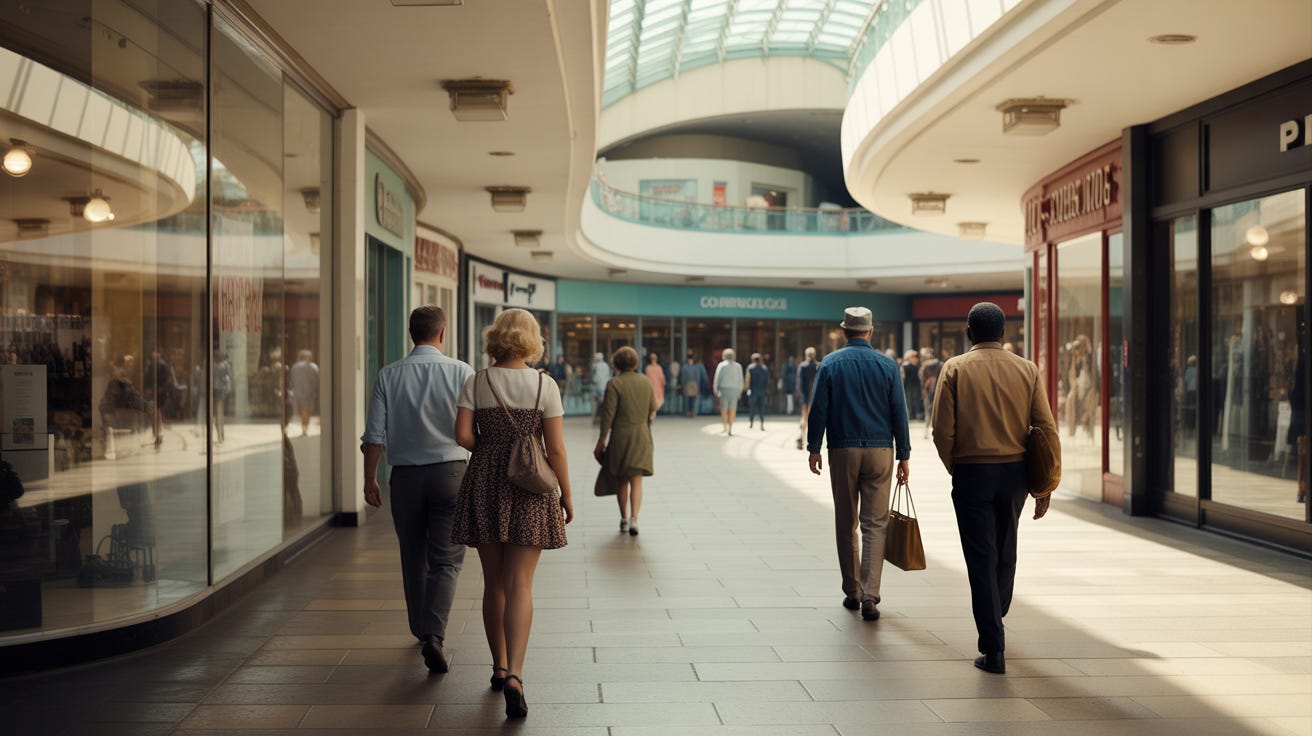
Shopping malls extended the wander. Weather disappeared. Anchors drew traffic through corridors lined with smaller retailers. The promenade became suburban.
Late 20th century — Behavioral mapping
Retailers studied traffic patterns, dwell zones, and endcap performance. The wander became measurable.
Platform era — The probabilistic feed
The corridor dissolved into code. Infinite scroll removed physical constraints. Algorithms began interpreting pauses, swipes, and micro-hesitations. The wander no longer required space — only attention.
In each phase, commerce refined its ability to shape what happens when intention fades.
🌗 The Double Edge
Designed wandering can delight. It produces discovery, surprise, and narrative. Some of retail’s most memorable finds occur not on the list, but along the path.
Yet design can slide from invitation into capture. When wandering becomes engineered without friction — when there is no natural stopping point — autonomy blurs. In physical space, fatigue eventually intervened. In digital space, the architecture rarely tires.
The line between serendipity and compulsion is thin.
A promenade invites movement. An infinite scroll removes the exit.
🌟 The Echo Today
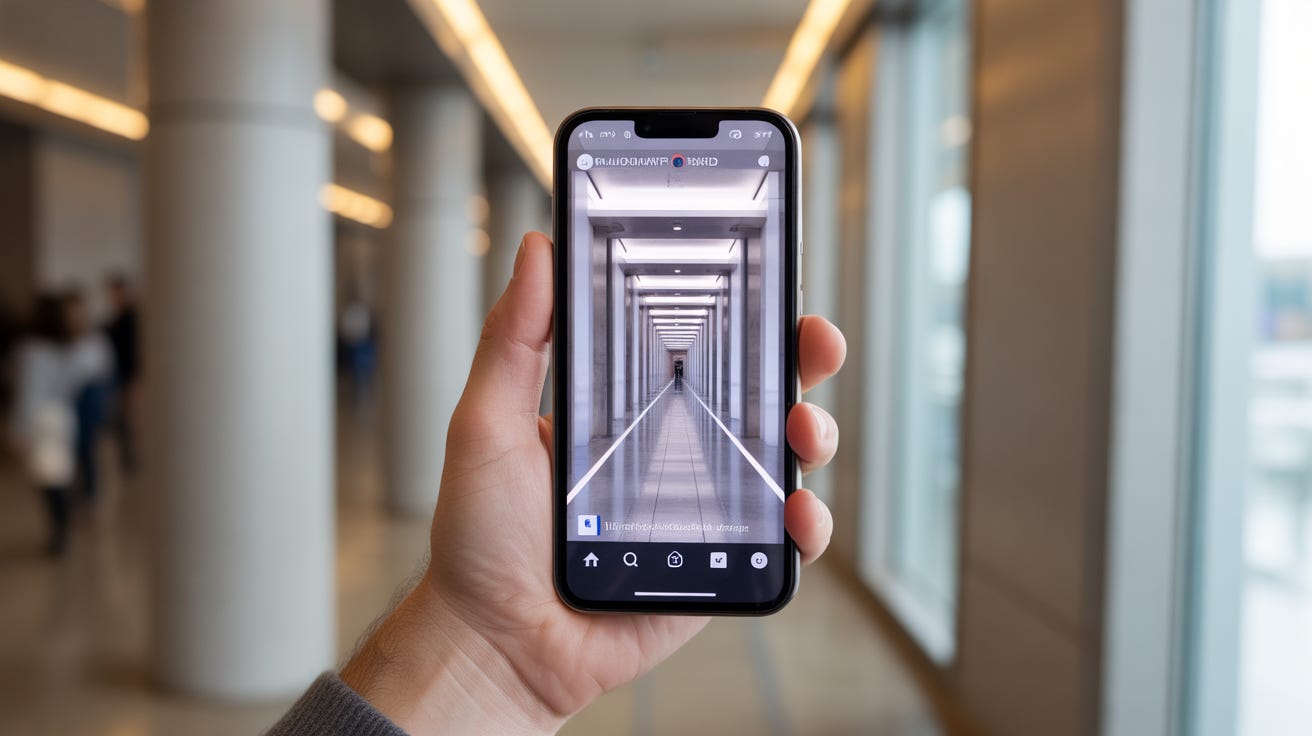
We see the designed wander in short-form video feeds, auto-play queues, recommendation carousels, and livestream commerce. The mechanics are invisible, but the pattern is familiar: reduce intention, increase exposure, prolong presence.
In 19th-century Paris, you drifted beneath iron balconies and glass domes.
Today, you drift beneath an interface that never ends.
The wander still leads to the cart.